Scaling Robotics Training Through Simulation & Data
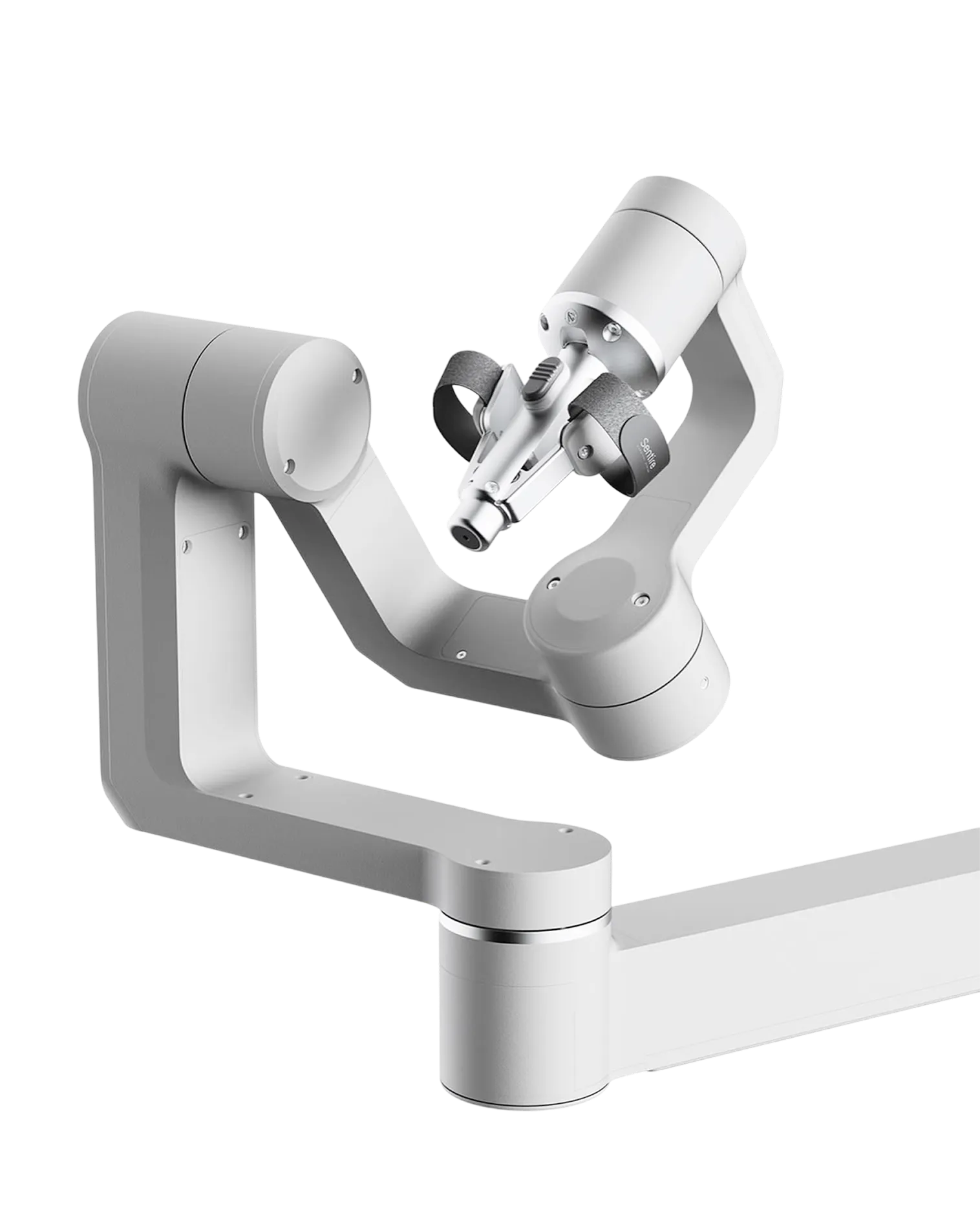
~15T
tokens of human output
Nobody set out to build it. Thirty years of the internet was the dataset, and it was open enough that anyone could train on it.
A robot cannot read its way to competence. It needs interaction data, and nobody ever wrote that down.
Text, images, code
Abundant
Scraped once, copied everywhere, free to train on.
Contact, force, failure, recovery
Scarce
Has to be physically performed. No archive of it exists.
The stack is real, but it is scattered across four layers — and the data layer is the thinnest of them.
Collecting physical data privately
Infrastructure for robotics: the environments to train in, the compute to train on, and an open way to collect and label the data none of it works without.
Collection feeds labeling, simulation verifies it, verified data builds better environments, and the incentive layer pays for every step.
A Bittensor subnet for robotics annotation. Miners compete to label raw sensor and video data; validators score the work.
Next: Needs verifiable ground truth to score against.
Simulated scenes where every label is known by construction. Those scenes seed the honeypots that keep scoring honest.
Next: Verified labels come back as usable datasets.
Good labels describe real spaces well enough to rebuild them in sim, then vary them — lighting, clutter, flooring, traffic.
Next: More environments mean more tasks worth labeling.
Emissions reward accurate miners. Bounties let a team pay for the exact data it lacks. Agents settle compute with x402.
Next: Rewards pull in the next cohort of contributors.
None of these works alone. Labeling without ground truth cannot be scored. Simulation without real data drifts from the world. Neither happens at all unless someone is paid to do it.
A Bittensor subnet for robotics annotation. CodecFlow is one of the founding teams.
01
Raw data in
Sensor streams, teleop episodes, video of real spaces.
02
Miners label
Independent operators compete to annotate the same batch.
03
Validators score
Submissions are compared against each other and against known truth.
04
Rewards settle
Emissions flow to whoever labeled accurately, continuously.
Live output — 17 seconds of egocentric footage
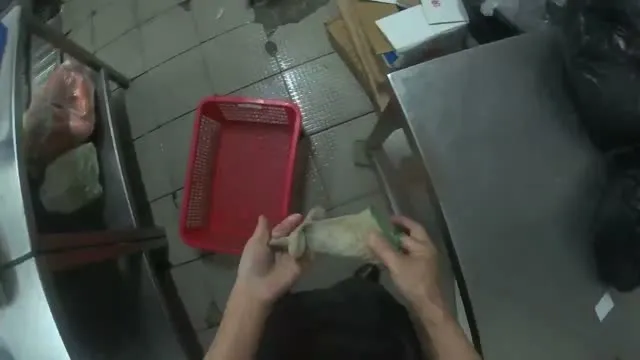
Five segments the network produced from this clip — each one a primitive, a span and a description.
Everyone is collecting data. Almost nobody can use it, because unlabeled sensor data teaches a model nothing. Distributing the labeling across a competitive network is how the annotation keeps up with the collection.
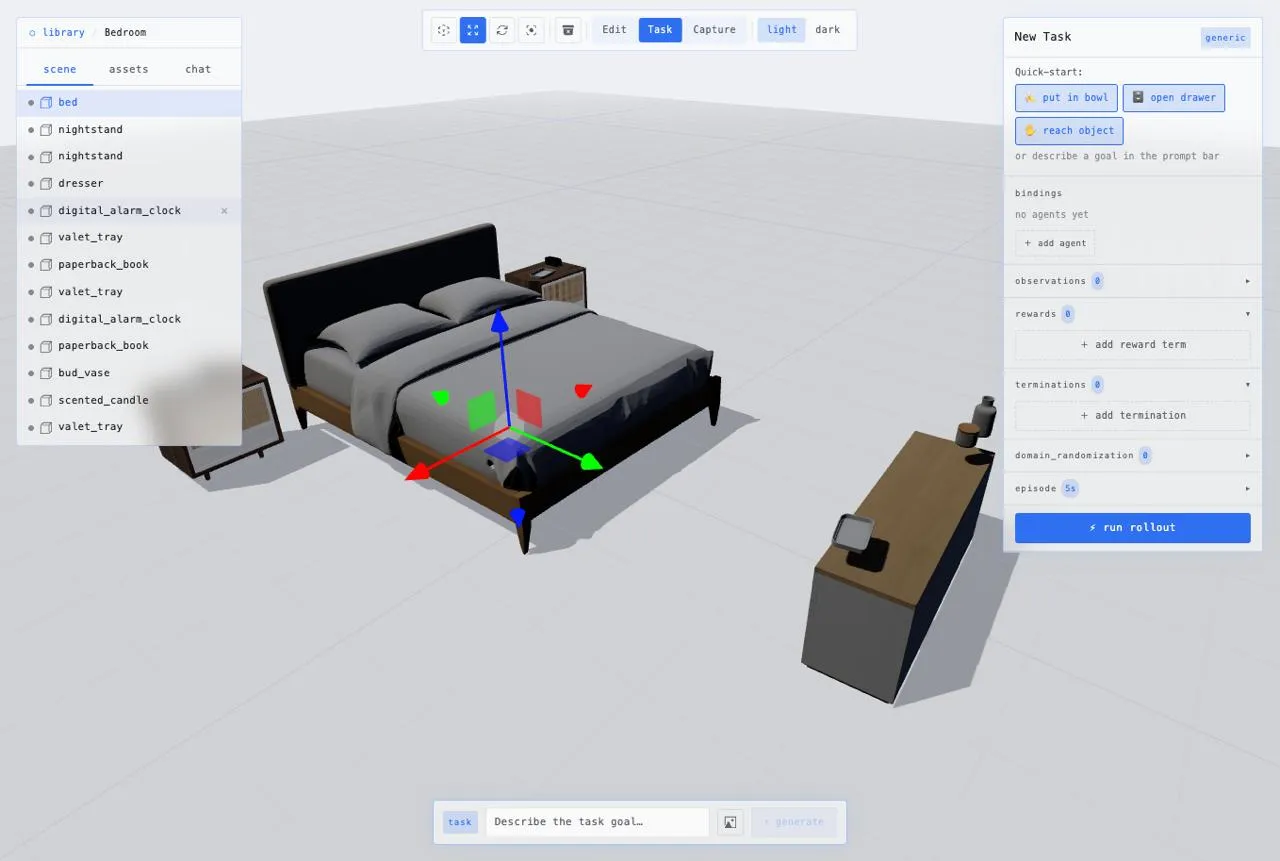

What the miner sees — answers already known
In sim, the label is free
The scene was constructed, so every pose, mask and contact is known exactly — no annotator required.
Seed it into real batches
Synthetic tasks with known answers go out alongside genuine work, indistinguishable to the miner.
Score honesty, not opinion
A miner's accuracy on the honeypots is measurable, so rewards track real quality rather than consensus.
A well-labeled space can be rebuilt in simulation — then varied far past what was recorded.
Captured once
A walkthrough of a hotel lobby
Rebuilt, then varied
Carpet in the walkway
Furniture moved
Pedestrian traffic
Low light / glare
Door needs force
Wet or polished floor
The robot never trains on the lobby as it was filmed. It trains on hundreds of versions of it. That is the compounding step — good labels turn one recording into an environment generator.
Used where there is a coordination problem a database does not solve — not everywhere.
Thor on Bittensor
Rewarding accuracy
Subnet emissions pay miners in proportion to measured label quality. Nobody approves the payouts.
Open marketplace
Bounties for missing data
A team describes the environment and data it needs, attaches a bounty, and anyone can go collect it.
x402
Agents paying for compute
An automated pipeline settles its own GPU and tool usage. We shipped one of the first 'up to' payment schemes on Solana for exactly this.
Open data about the physical world does not appear because it would be good if it did. It appears when collecting and labeling it pays better than not doing it.
Collect & label
Thor
Verify
SimArena ground truth
Build twins
Variation at scale
Reward
Incentive layer
The data does not exist yet
Which means it is still possible to decide how it gets built.
Simulation is what makes labels checkable
Ground truth is free in a world you constructed.
Open beats owned, if it is paid for
Incentives are the only reason a distributed network out-collects one company.
hello@codecflow.ai
+971 55 667 788
www.codecflow.ai